
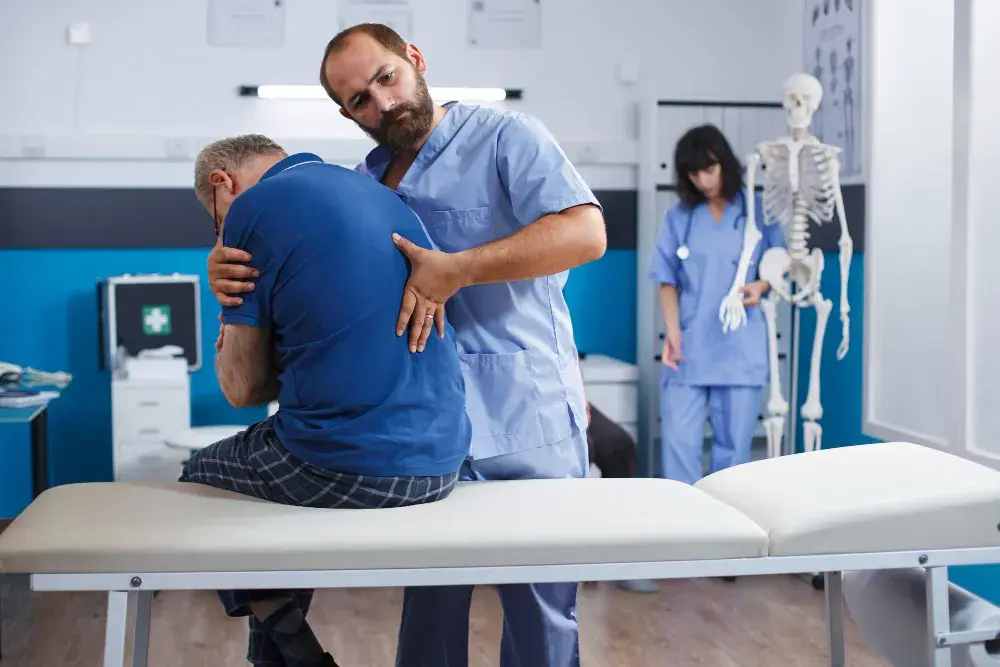
Comprehensive, Personalized Care for Persistent Pain
Pain can affect far more than the part of the body that hurts. At De Pain & Paralysis Clinic, we take a comprehensive approach to pain management—combining clinical assessment, acupuncture, manual therapy, rehabilitation, therapeutic exercise, lifestyle support, and other appropriate integrative interventions to develop a treatment programme around the individual patient.
Understanding Your Pain
Pain is a complex biological experience involving the nervous system, muscles, joints, connective tissues, and other physiological processes.
It may result from an identifiable injury or disease, develop from long-standing musculoskeletal problems, arise from nerve dysfunction, or persist even after the original injury has healed. This is why two people with seemingly similar conditions may experience very different levels of pain and functional limitation.
Where appropriate, we may recommend further medical investigation or referral when additional evaluation is required.
Our assessment considers more than the location of your pain. We consider:
Conditions We Commonly Manage
Our pain management services are designed for a broad range of painful conditions, particularly musculoskeletal, neuropathic, and persistent pain presentations.
Musculoskeletal Pain
Neuropathic & Nerve-Related Pain
Spine-Related Pain
Other Persistent Pain Conditions
Every case is assessed individually to determine whether our services are appropriate and whether additional medical care or referral is required.
Our Approach to Pain Management
Assessment Before Treatment
Effective pain management begins with understanding the patient. Before developing a treatment programme, we assess your symptoms, functional limitations, relevant medical history, previous investigations, and treatment goals.
Where necessary, existing reports such as MRI, CT, X-ray, laboratory results, or specialist reports may be reviewed as part of the clinical assessment. This helps us determine the most appropriate treatment strategy for your individual presentation.
Personalized Treatment
There is no single treatment that is appropriate for every type of pain. Depending on your condition, your programme may combine several therapeutic approaches.
Neuroacupuncture
Advanced acupuncture stimulation may be incorporated into your pain management follow-up to address pain and associated functional limitations. Treatment may include medical acupuncture, classical acupuncture, electroacupuncture, or neuroacupuncture.
Read moreManual Therapy
Appropriate manual techniques may be used to address musculoskeletal restrictions, soft-tissue dysfunction, movement limitations, and other contributing factors.
Read morePhysical Rehabilitation
Where pain is associated with weakness, reduced mobility, poor movement patterns, or functional limitations, rehabilitation and therapeutic exercise may form an important part of treatment.
Read moreNeurorehabilitation
For patients whose pain is associated with neurological dysfunction, nerve injury, stroke, paralysis, or other neurological conditions, pain management may be integrated with a broader neurorehabilitation programme.
Read moreLifestyle & Supportive Care
Sleep, physical activity, stress, nutrition, work habits, and other lifestyle factors can influence the experience and persistence of pain. Where appropriate, we incorporate practical lifestyle guidance into the overall treatment plan.
Read moreConditions We Commonly See
Our clinical experience includes patients presenting with conditions such as:
Cervical Spondylosis
Degenerative changes affecting the cervical spine that may contribute to neck pain, stiffness, headaches, or nerve-related symptoms.
Cervical Radiculopathy
Pain, numbness, tingling, or weakness resulting from irritation or compression of cervical nerve roots.
Trigeminal Neuralgia
A neurological pain disorder characterized by recurrent episodes of severe facial pain along the distribution of the trigeminal nerve.
Low Back Pain & Sciatica
Pain involving the lower back, with or without radiation into the buttocks or lower limb.
Chronic Musculoskeletal Pain
Persistent pain involving muscles, joints, ligaments, tendons, or other musculoskeletal structures.
Neuropathic Pain
Pain associated with dysfunction or injury affecting the nervous system, which may present as burning, shooting, electric-like, tingling, or abnormal sensory experiences.
Beyond Pain Relief: Restoring Function
Pain reduction is important—but it is not always the only measure of meaningful recovery. For patients whose pain has affected movement or daily function, we also monitor changes such as:
Where appropriate, standardized clinical assessment tools may also be incorporated into the rehabilitation process. This allows us to track progress more objectively rather than relying solely on how a patient feels from one session to another.
A Documented Clinical Experience
Significant Improvement in Long-Standing Trigeminal Neuralgia
One of our documented clinical cases involved a patient who had experienced severe facial pain associated with trigeminal neuralgia for more than two years.
Following clinical assessment and a personalized treatment programme incorporating appropriate integrative interventions, the patient experienced significant improvement within less than two months of treatment.
The case represents one of our clinical experiences demonstrating the potential for meaningful improvement even in patients presenting with long-standing pain. Every patient is different, and individual treatment response cannot be guaranteed.
Read the Full Clinical Case StudyWhat Makes Our Pain Management Approach Different?
We Look Beyond the Symptom
Rather than focusing exclusively on where the patient feels pain, we consider the neurological, musculoskeletal, functional, and lifestyle factors that may be contributing to the patient's overall presentation.
We Integrate Multiple Disciplines
Acupuncture, manual therapy, physical rehabilitation, therapeutic exercise, lifestyle support, and other appropriate interventions can be coordinated within one individualized treatment programme.
We Measure Progress
Where clinically appropriate, we monitor pain, movement, strength, function, and other relevant outcomes throughout treatment.
We Individualize Treatment
Treatment is determined by the patient's clinical presentation, goals, response to treatment, and functional needs—not by a fixed protocol applied to everyone.
We Recognize When Referral Is Necessary
Integrative care should work alongside appropriate medical care. Where a condition requires additional investigation, specialist assessment, medication management, surgery, or another form of medical intervention, we encourage appropriate referral and collaborative care.
Your Pain Has a Story. Let's Understand It.
Whether you have been experiencing pain for several weeks, several years, or have already tried multiple treatment approaches, the first step is understanding your individual condition. At De Pain & Paralysis Clinic, we combine clinical assessment with personalized treatment and functional rehabilitation to help patients work toward meaningful improvement.
Important Clinical Note: Pain management is individualized. No treatment can guarantee a particular outcome, and the suitability of any intervention depends on the patient's diagnosis, medical history, clinical findings, and overall health.
Frequently Asked
Questions
Yes. Our approach emphasizes appropriate non-surgical interventions, including neuroacupuncture, physical therapy, manual therapy and supportive care. Where surgery or other specialist medical intervention is indicated, we recommend appropriate referral.
Yes, some chronic pain conditions can be managed effectively through our individualized advanced management techniques. However, outcomes depend on the underlying cause, severity, duration and individual clinical factors.
We combine clinical assessment with multiple complementary and rehabilitative interventions. Rather than focusing exclusively on your temporary symptom relief, we also consider any mobility, functional limitations, contributing factors and long-term self-management.
There is no universal treatment duration, ideally. The number and frequency of sessions depend on your diagnosis, clinical findings, response to treatment and rehabilitation goals. Your recommended programme will be discussed after the initial assessment.